Introduction and Location
Wat Sri Suphan, widely celebrated as the “Silver Temple” is one of the most structurally unique Buddhist compounds in the world. It is located just south of Chiang Mai’s historic Old City walls on Wualai Road (Haiya District)—an area universally recognized as the beating heart of Thailand’s traditional silversmithing trade. The temple functions not only as an active house of worship but also as a living testament to Lanna artistic heritage and community-driven architectural innovation.
Historical Origins
The foundational history of the temple stretches back over half a millennium. It was established around 1500 AD (specifically cited in local stone inscriptions as 2043 B.E.) under the patronage of King Phra Muang Kaew (also known as Pilokpanaddathirat), the 11th ruler of the Mangrai Dynasty of the Lanna Kingdom. The King and his mother, Queen Siriyasuwadee, facilitated the building of the original complex and enshrined its primary sacred Buddha image, Phra Buddha Pathiharn (popularly called Phrachao Ched Tue).
The Culture of Silversmithing in Chiang Mai
To understand the temple’s modern appearance, one must examine the silver-crafting culture of the surrounding Wualai neighborhood. The lineage of these artisans dates back to the late 18th and early 19th centuries. Following decades of Burmese occupation, King Kawila retook and resettled Chiang Mai. To rebuild the city’s economy and cultural infrastructure, he gathered skilled artisans—including master silversmiths from the Shan States and Salween River regions—and settled them in the Wualai quarter. For over two centuries, these craftsmen organized into localized guilds, passing down two signature metalworking techniques:
- Repoussé: The painstaking method of hammering malleable sheets of metal from the reverse side to create intricate, three-dimensional raised designs.
- Chasing: The technique of refining, engraving, and detailing the metal patterns from the front side.
Faced with the declining popularity of traditional silver and the migration of younger generations to modern industries, the community elders and the temple’s abbot launched a radical revival project in 2004. They decided to completely redesign the deteriorating main ordination hall using their ancestral metal beating craft, turning the temple into a permanent canvas for their skills and an active learning incubator.
Travel Journal / Issue 7
The Architectural Complex and Key Monuments
- The Silver Ubosot (Ordination Hall)
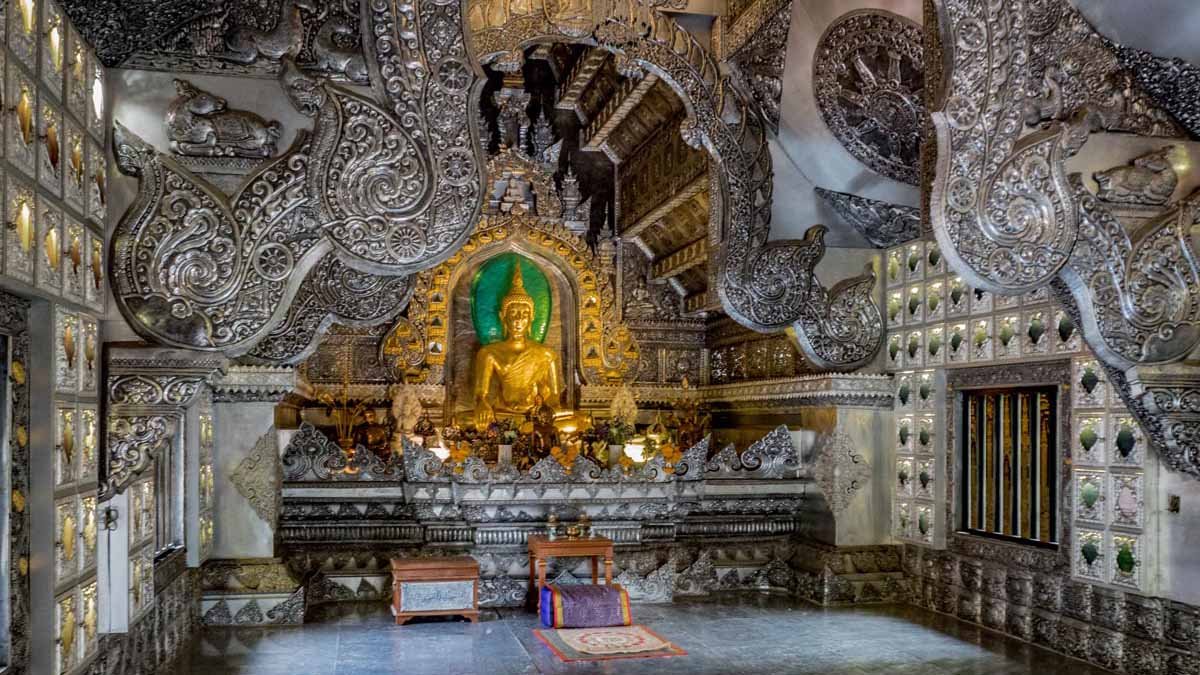
The crown jewel of the complex is the Silver Ubosot. Reconstructed between 2004 and 2016, it is the first ordination hall of its kind in the world. Due to the massive scale of the building and the high cost of raw materials, the structural cladding is crafted from a specialized alloy mixture of aluminum, nickel, and zinc for outdoor durability, while pure, high-grade silver is reserved exclusively for sacred internal features, focal ornaments, and key Buddha statues.
The exterior and interior panels showcase spectacular metal reliefs. These details artfully merge traditional Lanna motifs, Buddhist Jataka tales (stories of the Buddha’s past lives), and zodiac symbols with surprisingly modern global imagery—including depictions of international landmarks, passenger jets, and even small hidden comic-book superheroes, reflecting the contemporary worldview of the local artists.
Cultural Taboo: In accordance with ancient Lanna Buddhist cosmology and localized rules of ritual energy, women are strictly prohibited from entering the interior of this specific silver ubosot. However, female visitors are fully welcome to explore the extensive exterior reliefs and all other buildings in the complex.
- The Main Viharn (Assembly Hall)
Contrasting with the metallic sheen of the Ubosot is the large, renovated Lanna-style wooden and masonry Viharn. This hall houses massive, beautifully gilded Buddha figures and acts as the primary prayer space for daily community rituals, open unconditionally to all visitors.
- Phra Wihan Borommathai Chedi (The Stupa)
Directly behind the prayer halls sits the sacred brick and plaster chedi. Though the historic 500-year-old stupa structure unexpectedly collapsed in September 2022 following severe torrential rains, the site remains deeply holy. The incident revealed dozens of hidden ancient antiquities, crystal Buddhas, and bronze artifacts buried within its core, which are being preserved alongside reconstruction plans coordinated by the Thai Fine Arts Department.
- Ancient Lanna Arts Study Centre
True to its purpose as a community hub, the compound features an on-site silverware learning workshop. Here, master silversmiths teach the younger generation and offer interactive workshops where international travelers can learn basic metal-stamping techniques to create their own souvenirs.


